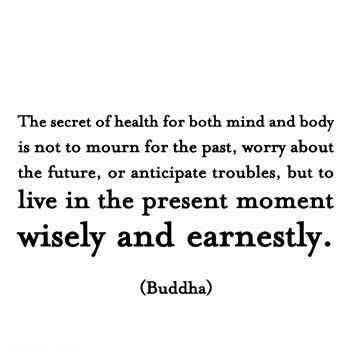
"The secret of health for both mind and body is not to mourn for the past, nor to worry about the future, but to live the present moment wisely and earnestly."
— Buddha Siddhartha Guatama Shakyamuni
Showing posts with label Buddhist. Show all posts
Showing posts with label Buddhist. Show all posts
10/2/08


7/23/08
7/8/08
true
The most basic Buddhist teaching is that everything is change, a never-ending series of changes. Nothing is ever still. What Buddhism seeks to do is, in the midst of that changing reality from which we can never divorce ourselves, in the midst of the "mud" of reality, to help us achieve a state of the highest hope and fulfillment and to lead society and our environment in the direction of peace and prosperity.
3/14/08
Woof
A dog is not considered a good dog because he is a good barker. A man is not considered a good man because he is a good talker. - Buddha
10/26/07
The Shambhala Warrior
· Firmly establish your intention to live your life for the healing of the world. Be conscious of it, honour it, nurture it every day.
· Be fully present in our time. Find the courage to breathe in the suffering of the world. Allow peace and healing to breathe out through you in return.
· Do not meet power on its own terms. See through to its real nature - mind and heart made. Lead your response from that level.
· Simplify. Clear away the dead wood in your life. Look for the heartwood and give it the first call on your time, the best of your energy.
· Put down the leaden burden of saving the world alone. Join with others of like mind. Align yourself with the forces of resolution.
· Hold in a single vision, in the same thought, the transformation of yourself and the transformation of the world. Live your life around that edge, always keeping it in sight.
· As a bird flies on two wings, balance outer activity with inner sustenance.
· Following your heart, realise your gifts. Cultivate them with diligence to offer knowledge and skill to the world.
· Train in non-violence of body, speech and mind. With great patience to yourself, learn to make beautiful each action, word and thought.
· In the crucible of meditation, bring forth day by day into your own heart the treasury of compassion, wisdom and courage for which the world longs.
· Sit with hatred until you feel the fear beneath it. Sit with fear until you feel the compassion beneath that.
Do not set your heart on particular results. Enjoy positive action for its own sake and rest confident that it will bear fruit.
· When you see violence, greed and narrow-mindedness in the fullness of its power, walk straight into the heart of it, remaining open to the sky and in touch with the earth.
· Staying open, staying grounded, remember that you are the inheritor of the strengths of thousands of generations of life.
· Staying open, staying grounded, recall that the thankful prayers of future generations are silently with you.
· Staying open, staying grounded, be confident in the magic and power that arise when people come together in a great cause.
· Staying open, staying grounded, know that the deep forces of Nature will emerge to the aid of those who defend the Earth.
· Staying open, staying grounded, have faith that the higher forces of wisdom and compassion will manifest through our actions for the healing of the world.
· When you see weapons of hate, disarm them with love.
When you see armies of greed, meet them in the spirit of sharing.
When you see fortresses of narrow-mindedness, breach them with truth.
When you find yourself enshrouded in dark clouds of dread, dispel them with fearlessness.
When forces of power seek to isolate us from each other, reach out with joy.
· In it all and through it all, holding to your intention, let go into the music of life. Dance!
by John Wigham / Akuppa akuppa@mac.com
· Be fully present in our time. Find the courage to breathe in the suffering of the world. Allow peace and healing to breathe out through you in return.
· Do not meet power on its own terms. See through to its real nature - mind and heart made. Lead your response from that level.
· Simplify. Clear away the dead wood in your life. Look for the heartwood and give it the first call on your time, the best of your energy.
· Put down the leaden burden of saving the world alone. Join with others of like mind. Align yourself with the forces of resolution.
· Hold in a single vision, in the same thought, the transformation of yourself and the transformation of the world. Live your life around that edge, always keeping it in sight.
· As a bird flies on two wings, balance outer activity with inner sustenance.
· Following your heart, realise your gifts. Cultivate them with diligence to offer knowledge and skill to the world.
· Train in non-violence of body, speech and mind. With great patience to yourself, learn to make beautiful each action, word and thought.
· In the crucible of meditation, bring forth day by day into your own heart the treasury of compassion, wisdom and courage for which the world longs.
· Sit with hatred until you feel the fear beneath it. Sit with fear until you feel the compassion beneath that.
Do not set your heart on particular results. Enjoy positive action for its own sake and rest confident that it will bear fruit.
· When you see violence, greed and narrow-mindedness in the fullness of its power, walk straight into the heart of it, remaining open to the sky and in touch with the earth.
· Staying open, staying grounded, remember that you are the inheritor of the strengths of thousands of generations of life.
· Staying open, staying grounded, recall that the thankful prayers of future generations are silently with you.
· Staying open, staying grounded, be confident in the magic and power that arise when people come together in a great cause.
· Staying open, staying grounded, know that the deep forces of Nature will emerge to the aid of those who defend the Earth.
· Staying open, staying grounded, have faith that the higher forces of wisdom and compassion will manifest through our actions for the healing of the world.
· When you see weapons of hate, disarm them with love.
When you see armies of greed, meet them in the spirit of sharing.
When you see fortresses of narrow-mindedness, breach them with truth.
When you find yourself enshrouded in dark clouds of dread, dispel them with fearlessness.
When forces of power seek to isolate us from each other, reach out with joy.
· In it all and through it all, holding to your intention, let go into the music of life. Dance!
by John Wigham / Akuppa akuppa@mac.com
10/9/07
7/13/07
The Paradox Of Our Age
We have bigger houses but smaller families;
more conveniences, but less time.
We have more degrees but less sense;
more knowledge but less judgment;
more experts, but more problems;
more medicines but less healthiness.
We’ve been all the way to the moon and back,
but have trouble in crossing the street to meet our new neighbour.
We built more computers to hold more copies than ever,
But have less real communication;
We have become long on quantity,
but short on quality.
These are times of fast foods but slow digestion;
Tall mean but short characters;
Steep profits but shallow relationships.
It’s a time when there is much in the window
But nothing in the room.
H.H. the 14th Dalai Lama.
We have bigger houses but smaller families;
more conveniences, but less time.
We have more degrees but less sense;
more knowledge but less judgment;
more experts, but more problems;
more medicines but less healthiness.
We’ve been all the way to the moon and back,
but have trouble in crossing the street to meet our new neighbour.
We built more computers to hold more copies than ever,
But have less real communication;
We have become long on quantity,
but short on quality.
These are times of fast foods but slow digestion;
Tall mean but short characters;
Steep profits but shallow relationships.
It’s a time when there is much in the window
But nothing in the room.
H.H. the 14th Dalai Lama.
6/23/07
To meditate does not mean to fight with a problem.
To meditate means to observe.
Your smile proves it.
It proves that you are being gentle with yourself,
that the sun of awareness is shining in you,
that you have control of your situation.
You are yourself,
and you have acquired some peace.
-Thich Nhat Hanh
To meditate means to observe.
Your smile proves it.
It proves that you are being gentle with yourself,
that the sun of awareness is shining in you,
that you have control of your situation.
You are yourself,
and you have acquired some peace.
-Thich Nhat Hanh
6/22/07
Tonglen
On-the-spot tonglen means that you just don't rush by; you actually breathe in with the wish that this person can be free of suffering, and send them out some kind of good heart or well-being. If seeing that other person's pain brings up fear or anger or confusion, which often happens, just start doing tonglen for yourself and all the other people who are stuck in the very same way.
When you do tonglen on the spot, you simply breathe in and breathe out, taking in pain and sending out spaciousness and relief. When you tonglen as a formal practice, it has four stages:
1) First,rest your mind briefly in a state of openness or stillness.
2) Second, work with texture. Breathe in a feeling of hot, dark, and heavy, and breathe out a feeling of cool, bright, and light. Breathe in and radiate completely, through all the pores of your body, until it feels synchronized with your in-and out-breathe.
3) Third, work with any painful personal situation that is real to you. Traditionally, you begin by doing tonglen for someone you care about. However, if your stuck, do the practice for your pain and simultaneously for all those just like you who feel that kind of suffering.
4) Finally, make the taking in and the sending out larger. Whether your doing tonglen for someone you love or for someone you see on television, do it for all the others in the same boat. You could even do tonglen for people you consider your enemies--those who have hurt you or others. Do tonglen for them, thinking of them as having the same confusion and stuckness as your find or yourself.
This is to say that tonglen can extend indefinitely. As you do the practice, gradually, over time, your compassion naturally expands-- and so does your realization that things are not as solid as you thought. As you do this practice, at your own pace, you'll be surprised to find yourself more and more able to be there for others, even in what seemed like impossible situations.
-Pema Chodron
When you do tonglen on the spot, you simply breathe in and breathe out, taking in pain and sending out spaciousness and relief. When you tonglen as a formal practice, it has four stages:
1) First,rest your mind briefly in a state of openness or stillness.
2) Second, work with texture. Breathe in a feeling of hot, dark, and heavy, and breathe out a feeling of cool, bright, and light. Breathe in and radiate completely, through all the pores of your body, until it feels synchronized with your in-and out-breathe.
3) Third, work with any painful personal situation that is real to you. Traditionally, you begin by doing tonglen for someone you care about. However, if your stuck, do the practice for your pain and simultaneously for all those just like you who feel that kind of suffering.
4) Finally, make the taking in and the sending out larger. Whether your doing tonglen for someone you love or for someone you see on television, do it for all the others in the same boat. You could even do tonglen for people you consider your enemies--those who have hurt you or others. Do tonglen for them, thinking of them as having the same confusion and stuckness as your find or yourself.
This is to say that tonglen can extend indefinitely. As you do the practice, gradually, over time, your compassion naturally expands-- and so does your realization that things are not as solid as you thought. As you do this practice, at your own pace, you'll be surprised to find yourself more and more able to be there for others, even in what seemed like impossible situations.
-Pema Chodron
2/25/07
The Ten Commandments of Mindfulness
1. Yearn not for a body free of disease and suffering, because without going through pain and illness, sundry desires are easily awakened.
2. Wish not for a life free of mishaps and obstacles, because without them one tends to become arrogant and egotistic.
3. Pray not for a quick shortcut regarding spiritual introspect, because without excruciating effort, one becomes short-learning.
4. Fear not the haunting disturbance of evil while accumulating spiritual strength, because without them one’s determination does not grow solid strong.
5. Hope not for easy success in one’s work, because without difficulties and failures, one tends to undervalue others and become overly proud.
6. Build not relationships on selfish gain, because a relationship based on profit has lost its genuine meaning.
7. Look not for a universal consensus regarding one’s personal opinion, because complete adoption to a single opinion will render narrow mindedness.
8. Expect not repayment or reward from others for one’s services, because calculation and expectation contradicts true service.
9. Engage not irrationally into profitable attractions, because jumping too quickly into temptation may well blind wisdom.
10. Stir not at being victim of injustice, because eagerness to clarify reputation belongs to an ego too attached to loose.
Translated into English by Tam Lac Jessica A. Tran
2. Wish not for a life free of mishaps and obstacles, because without them one tends to become arrogant and egotistic.
3. Pray not for a quick shortcut regarding spiritual introspect, because without excruciating effort, one becomes short-learning.
4. Fear not the haunting disturbance of evil while accumulating spiritual strength, because without them one’s determination does not grow solid strong.
5. Hope not for easy success in one’s work, because without difficulties and failures, one tends to undervalue others and become overly proud.
6. Build not relationships on selfish gain, because a relationship based on profit has lost its genuine meaning.
7. Look not for a universal consensus regarding one’s personal opinion, because complete adoption to a single opinion will render narrow mindedness.
8. Expect not repayment or reward from others for one’s services, because calculation and expectation contradicts true service.
9. Engage not irrationally into profitable attractions, because jumping too quickly into temptation may well blind wisdom.
10. Stir not at being victim of injustice, because eagerness to clarify reputation belongs to an ego too attached to loose.
Translated into English by Tam Lac Jessica A. Tran
11/20/06
11/10/06
The Medicine of Altruism
Practicing altruism is the real source of compromise and cooperation; merely recognizing our need for harmony is not enough. A mind committed to compassion is like an overflowing reservoir – a constant source of energy, determination and kindness.
Dalai Lama
Dalai Lama
10/22/06
Slow Down
You are asked — temporarily, of course — to lay aside all your philosophical, religious, and political opinions, and to become almost like an infant, knowing nothing. Nothing, that is, except what you actually hear, see, feel, and smell. Take it that you are not going anywhere but here, and that there never was, is, or will be any other time than now. Simply be aware of what actually is without giving it names and without judging it, for you are now feeling out reality itself instead of ideas and opinions about it. There is no point in trying to suppress the babble of words and ideas that goes on in most adult brains, so if it won't stop, let it go on as it will, and listen to it as if it were the sound of traffic or the clucking of hens.
Let your ears hear whatever they want to hear; let your eyes see whatever they want to see; let your mind think whatever it wants to think; let your lungs breathe in their own rhythm. Do not expect any special result, for in this wordless and idea-less state, where can there be past or future, and where any notion of purpose? Stop, look, and listen...
Alan Watts
Tao: The Watercourse Way
Let your ears hear whatever they want to hear; let your eyes see whatever they want to see; let your mind think whatever it wants to think; let your lungs breathe in their own rhythm. Do not expect any special result, for in this wordless and idea-less state, where can there be past or future, and where any notion of purpose? Stop, look, and listen...
Alan Watts
Tao: The Watercourse Way
10/20/06
One of the fundamental points
 of the spiritual journey is to persevere along the path. Though one's meditation may be good one day and and not so good the next, like changes in scenery, essentially it is not the experiences, good or bad which count so much, but rather that when you persevere, the real practice rubs off on you and comes through both good and bad. Good and bad are simply apparations, just as there may be good or bad weather, yet the sky is always unchanging. If you persevere and have that sky like attitude of spaciousness, without being perturbed by emotions and experiences, you will develop stability and the real profoundness of meditation will take effect. You will find that gradually and almost unnoticed, your attitude begins to change. You do not hold on to things as solidly as before, or grasp at them so strongly, and though crisis will still happen, you can handle them a bit better with more humor and ease. You will even be able to laugh at difficulties a little, since there is more space between you and them, and you are freer of yourself. Things become less solid, slightly ridiculous, and you become more lighthearted.
more
10/4/06
1. To feed himself during the period of meditation, Gautama had collected enough food to last him for forty days.
2. Having routed the evil thoughts that disturbed his mind, Gautama refreshed himself with food and gained strength. He thus prepared himself for meditation with the aim of obtaining enlightenment.
3. It took Gautama four weeks of meditation to obtain enlightenment. He reached final enlightenment in four stages.
4. In the first stage he called forth reason and investigation. His seclusion helped him to attain it easily.
5. In the second stage he added concentration.
6. In the third stage he brought to his aid equanimity and mindfulness.
7. In the fourth and final stage he added purity to equanimity and equanimity to mindfulness.
8. Thus with mind concentrated, purified, spotless, with defilement gone, supple, dexterous, firm, impassionate [=dispassionate], not forgetting what he is [=was] after, Gautama concentrated himself on the problem of finding an answer to the question which had troubled him.
9. On the night of the last day of the fourth week, light dawned upon him. He realised that there were two problems. The first problem was that there was suffering in the world, and the second problem was how to remove this suffering and make mankind happy.
10. So in the end, after meditation for four weeks, darkness was dispelled, light arose, ignorance was dispelled and knowledge arose. He saw a new way.
2. Having routed the evil thoughts that disturbed his mind, Gautama refreshed himself with food and gained strength. He thus prepared himself for meditation with the aim of obtaining enlightenment.
3. It took Gautama four weeks of meditation to obtain enlightenment. He reached final enlightenment in four stages.
4. In the first stage he called forth reason and investigation. His seclusion helped him to attain it easily.
5. In the second stage he added concentration.
6. In the third stage he brought to his aid equanimity and mindfulness.
7. In the fourth and final stage he added purity to equanimity and equanimity to mindfulness.
8. Thus with mind concentrated, purified, spotless, with defilement gone, supple, dexterous, firm, impassionate [=dispassionate], not forgetting what he is [=was] after, Gautama concentrated himself on the problem of finding an answer to the question which had troubled him.
9. On the night of the last day of the fourth week, light dawned upon him. He realised that there were two problems. The first problem was that there was suffering in the world, and the second problem was how to remove this suffering and make mankind happy.
10. So in the end, after meditation for four weeks, darkness was dispelled, light arose, ignorance was dispelled and knowledge arose. He saw a new way.
A university student while visiting Gasan asked him: "Have you even read the Christian Bible?"
"No, read it to me," said Gasan.
The student opened the Bible and read from St. Matthew: "And why take ye thought for raiment? Consider the lilies of the field, how they grow. They toil not, neither do they spin, and yet I say unto you that even Solomon in all his glory was not arrayed like one of these...Take therefore no thought for the morrow, for the morrow shall take thought for the things of itself."
Gasan said: "Whoever uttered those words I consider and enlightened man."
The student continued reading: "Ask and it shall be given you, seek and ye shall find, knock and it shall be opened unto you. For everyone that asketh receiveth, and he that seeketh findeth, and to him that knocketh, is shall be opened."
Gasan remarked: "That is excellent. Whoever said that is not far from Buddhahood."
"No, read it to me," said Gasan.
The student opened the Bible and read from St. Matthew: "And why take ye thought for raiment? Consider the lilies of the field, how they grow. They toil not, neither do they spin, and yet I say unto you that even Solomon in all his glory was not arrayed like one of these...Take therefore no thought for the morrow, for the morrow shall take thought for the things of itself."
Gasan said: "Whoever uttered those words I consider and enlightened man."
The student continued reading: "Ask and it shall be given you, seek and ye shall find, knock and it shall be opened unto you. For everyone that asketh receiveth, and he that seeketh findeth, and to him that knocketh, is shall be opened."
Gasan remarked: "That is excellent. Whoever said that is not far from Buddhahood."
9/13/06
9/1/06
11/27/05
The essence of the Buddha's teaching is encapsulated in The Four Noble Truths:
1. The Noble Truth of Suffering
The First Noble Truth is suffering or dukkha. This includes physical, emotional and mental forms of suffering but can also be interpreted more widely as a feeling of ‘dissatisfaction’. Any happiness that we have in life will not last forever – old age, sickness and inevitably death cannot be avoided. In the scriptures, suffering is defined according to the following categories: Birth, Decay, Death, Sorrow, Lamentation, Pain, Grief and Despair. It is also defined as not getting what one desires.
2. The Noble Truth of the Origin of Suffering
The Second Noble Truth points to the origin of suffering, namely craving or tanha (literally ‘thirst’). At its most simple this relates to our constant craving for what is pleasurable in what we see, hear, smell, taste, touch and think. Our lives are constantly driven by our desire for pleasant sensations. When such pleasant sensations are denied us, as they inevitably are from time to time, then we feel frustrated, dissatisfied - we suffer. There can be more subtle forms of craving – a desire for fame, wealth, recognition – the list is endless.
3. The Noble Truth of the Extinction of Suffering
The Third Noble Truth refers to Nibbana in which craving has faded completely and thereby suffering too. It is an irrevocable ‘state’ of peace, in which greed, hatred and delusion have completely disappeared. By attaining to it, no more kamma is produced and the round of rebirths comes to an end.
4. The Noble Truth that leads to the Extinction of Suffering
The Fourth Noble Truth provides a practical pathway to the realization of Nibbana in the form of the Noble Eightfold Path. This consists of eight factors: right understanding, right thought, right speech, right action, right livelihood, right effort, right mindfulness and right concentration.
-Tony Flanagan is a practicing Buddhist and a teacher of English Language, Literature and Religious Studies to pre-university students at a College in the UK.
1. The Noble Truth of Suffering
The First Noble Truth is suffering or dukkha. This includes physical, emotional and mental forms of suffering but can also be interpreted more widely as a feeling of ‘dissatisfaction’. Any happiness that we have in life will not last forever – old age, sickness and inevitably death cannot be avoided. In the scriptures, suffering is defined according to the following categories: Birth, Decay, Death, Sorrow, Lamentation, Pain, Grief and Despair. It is also defined as not getting what one desires.
2. The Noble Truth of the Origin of Suffering
The Second Noble Truth points to the origin of suffering, namely craving or tanha (literally ‘thirst’). At its most simple this relates to our constant craving for what is pleasurable in what we see, hear, smell, taste, touch and think. Our lives are constantly driven by our desire for pleasant sensations. When such pleasant sensations are denied us, as they inevitably are from time to time, then we feel frustrated, dissatisfied - we suffer. There can be more subtle forms of craving – a desire for fame, wealth, recognition – the list is endless.
3. The Noble Truth of the Extinction of Suffering
The Third Noble Truth refers to Nibbana in which craving has faded completely and thereby suffering too. It is an irrevocable ‘state’ of peace, in which greed, hatred and delusion have completely disappeared. By attaining to it, no more kamma is produced and the round of rebirths comes to an end.
4. The Noble Truth that leads to the Extinction of Suffering
The Fourth Noble Truth provides a practical pathway to the realization of Nibbana in the form of the Noble Eightfold Path. This consists of eight factors: right understanding, right thought, right speech, right action, right livelihood, right effort, right mindfulness and right concentration.
-Tony Flanagan is a practicing Buddhist and a teacher of English Language, Literature and Religious Studies to pre-university students at a College in the UK.
Subscribe to:
Posts (Atom)